
Improve Your Logic Skills with Guess the Number Game
Logic skills are valuable in everyday life. They help you solve problems faster, make better decisions, and think more clearly under pressure. One simple and enjoyable way to sharpen those skills is by playing the Guess the Number game. This game may look easy at first, but it quickly teaches you how to analyze patterns, narrow down possibilities, and make smarter guesses. That is why many learners, students, and casual players enjoy it as both entertainment and brain training.
The best part is that Guess the Number is not just a random game. It encourages structured thinking. Every guess gives you feedback, and every piece of feedback helps you move closer to the correct answer. Over time, this process improves concentration, reasoning, and decision-making. When paired with practical tools like Code Examples, Keyboard Tester, Count My Cash, and Quick File Saver, it can also become part of a fun and productive digital routine.
Why Guess the Number Strengthens Logic
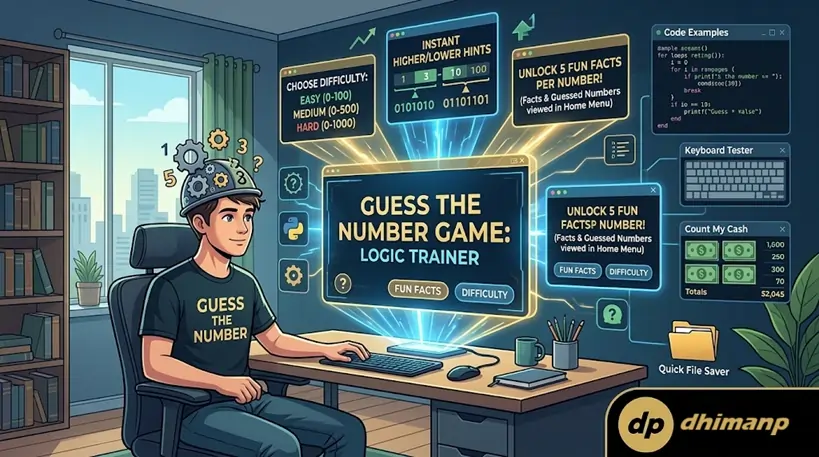
At its core, Guess the Number is more than just a guessing game — it combines logic, challenge, and learning. The game offers three difficulty modes: Easy (numbers between 0–100), Medium (numbers between 0–500), and Hard (numbers between 0–1000). Players try to discover the secret number using hints that tell them whether their guess is higher or lower than the correct answer.
What makes the game unique is its educational twist: when a player guesses the correct number, they unlock 5 interesting facts about that number. For example, if the secret number is 56 and the player correctly guesses 56, the game will reveal five fun or informative facts related to the number 56.
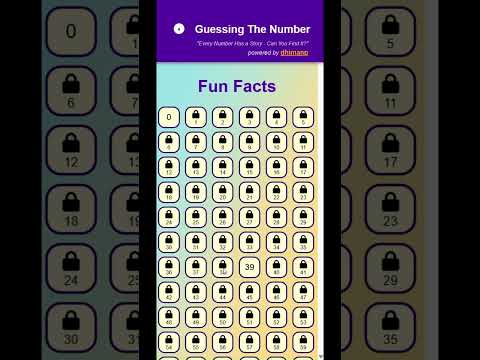
You can also view all the unlocked fun facts about the guessed numbers anytime by tapping the “Fun Facts” button available on the home menu screen.
Instead of guessing randomly, players soon learn to use strategy. They begin to divide the number range in half, think about probabilities, and avoid repeating poor choices. This kind of thinking is essential in logic development. It trains the brain to process information step by step instead of rushing to conclusions.
A great way to explain this process is through Code Examples. For instance, a basic binary search approach shows how logic can narrow down the answer efficiently. By comparing the middle point of the range and adjusting based on the result, players can reach the correct number in fewer moves. These Code Examples make the game not only fun but educational too.
How the Game Builds Better Thinking Habits
One of the biggest benefits of Guess the Number is that it improves mental discipline. The game rewards patience, observation, and smart planning. If you guess too quickly, you may waste attempts. If you think carefully, you improve your chances of winning.
This habit carries into real life. Whether you are solving a math problem, debugging a script, or organizing your daily tasks, logic helps you work more efficiently. Even simple tools like a Keyboard Tester can support this process by helping you ensure your equipment is working properly before you start a game, write code, or practice online learning tasks.
Using a Keyboard Tester may sound unrelated, but it plays a useful role in digital productivity. When keys respond correctly, you can focus fully on the game or your work without interruptions. A smooth setup makes it easier to concentrate on logic challenges like Guess the Number.
Guess the Number as a Learning Tool
Teachers, parents, and self-learners often use Guess the Number as a beginner-friendly activity. It introduces the basics of logical deduction in a simple and interactive way. Children learn how to compare numbers, while adults enjoy the challenge of making the fewest possible attempts.
For coding learners, the game is especially useful. It can be turned into a small programming project using Code Examples in Python, JavaScript, or other languages. This helps beginners understand loops, conditionals, and input handling. By building the game themselves, learners see how logic works behind the scenes.
If you are learning programming, combining Guess the Number with Code Examples gives you a strong foundation. You can experiment with different difficulty levels, random number generation, and score tracking. Every version of the game becomes a chance to improve your coding and reasoning skills.
Making Learning More Productive
Logic games are even better when they fit into a productive digital workflow. For example, Count My Cash is a helpful tool for people who want to manage money more carefully. While it may seem separate from a number game, both activities improve attention to detail and mental organization. A person who practices Guess the Number regularly may also become more comfortable with counting, estimating, and checking patterns.
Similarly, Quick File Saver is useful for storing notes, code snippets, or game strategies quickly. If you write down your best methods, your progress becomes easier to track. A simple habit like saving your favourite Code Examples in Quick File Saver can make learning faster and more organized.
This is where the game becomes more than entertainment. It becomes part of a broader system of smart digital habits. You play Guess the Number, test your keyboard with Keyboard Tester, save learning notes in Quick File Saver, and keep track of finances with Count My Cash. Together, these tools create a balanced and efficient learning experience.
Simple Strategies to Win More Often
To improve your performance in Guess the Number, start with the middle of the range. This method reduces the number of guesses needed. Instead of trying numbers one by one, divide the range into smaller parts after each clue.
Another smart technique is to stay consistent. Do not change strategies randomly after each round. Use a plan, observe the results, and adjust gradually. This is exactly the kind of thinking that strong logic skills require.
You can even create your own Code Examples to test different strategies. For example, one version may use a fixed range, while another may increase difficulty after each successful round. These Code Examples let you compare methods and see which one works best.
When you are comfortable, you can challenge yourself with timed rounds or limited attempts. This makes the game more exciting and improves focus. And before starting a session, a quick check with Keyboard Tester can make sure your controls are ready for fast input and smooth play.
Why People Enjoy It So Much
Guess the Number remains popular because it is easy to learn but hard to master. Anyone can start playing in seconds, yet improving your score takes real thinking. That balance makes it ideal for all ages.
It is also flexible. You can play it casually during a break or use it as part of a learning session. If you enjoy productivity tools like Count My Cash and Quick File Saver, then Guess the Number fits naturally into a smart digital lifestyle. It gives your brain a break while still keeping it active.
The game also builds confidence. Every correct answer feels rewarding because it comes from reasoning, not luck. That sense of progress motivates players to keep improving. As you practice more, you start to notice that your logic becomes sharper in other areas too.
Final Thoughts
Guess the Number is more than a simple game. It is a powerful way to build logic, improve focus, and practice smart decision-making. Through repeated play, you learn how to analyze information, make better guesses, and think more strategically. With the help of Code Examples, you can even turn it into a coding lesson. With Keyboard Tester, Count My Cash, and Quick File Saver, you can build a complete and productive digital routine around it.
If you want a fun activity that also trains your brain, Guess the Number is a great choice. It is simple, engaging, and highly effective for strengthening logic skills in a natural way.